


Most store owners think about growth in terms of traffic — more visitors, more ads, more reach. But there’s a cheaper way to grow that doesn’t require a single new customer: get your current customers to spend a little more each time they buy, thereby increasing your average order value (AOV).
Learning how to increase your average order value is one of the highest-leverage moves available to an ecommerce store because you already have the customer. The hard part, getting someone to your store and interested enough to add something to their cart, is already done.
This post is about how to do that without reaching for discounts, which is the most common mistake merchants make when they look at how to increase AOV.
What is average order value (and why discounting to raise it defeats the point)
Average order value is your total revenue divided by your number of orders over a given period. If you made $50,000 last month from 500 orders, your AOV is $100.
Raising your AOV means each order is worth more to you — which means more revenue from the same number of customers, without spending more on acquisition.
A lot of merchants try to push AOV up with offers such as “spend $150 and get 20% off.” The customer spends more, the AOV metric goes up, and it looks like a win. But if your margin on that extra spend is thin and you’ve just given 20% of it away, the actual profit from that order might be lower than a smaller order at full price.
The goal isn’t a higher AOV number — it’s more revenue per order that actually lands in your pocket. That means raising the value of each order without giving margin away to get there.
The mindset shift: Add value, don’t cut price
Discounts are easy. And they’re also the default move because they work in the short term — customers respond to them. However, they train customers to wait for a deal, they compress your margin, and they don’t actually make your products more valuable.
The better move is to help customers buy more of what they already want, or to surface things they didn’t know you sold. The ways to increase average order value all share the same goal — to make a bigger order feel like a better outcome for the customer, not a compromise they’re making to hit a threshold.
When you do this well, a higher AOV is a byproduct of a better shopping experience. That’s what this post is about.
Before the cart: Changes you can make on the product page
The product page is where buying decisions are made. And it’s one of the most underused places to raise order value. If you’re figuring out how to increase your average order value on Shopify, this is where to start. Most stores show a product, list the features, and hope the customer adds it to their cart. There’s usually a lot more you can do.
Bundles are the most direct lever. Instead of selling a single item, you group related products together at a single price — ideally at a slight saving over buying them separately, but not a discount deep enough to hurt your margin. A skincare store might bundle a cleanser, toner, and moisturizer as a “starter routine.” A homewares store might bundle a candle, a diffuser, and a room spray. The customer gets a complete solution; you get a larger order.
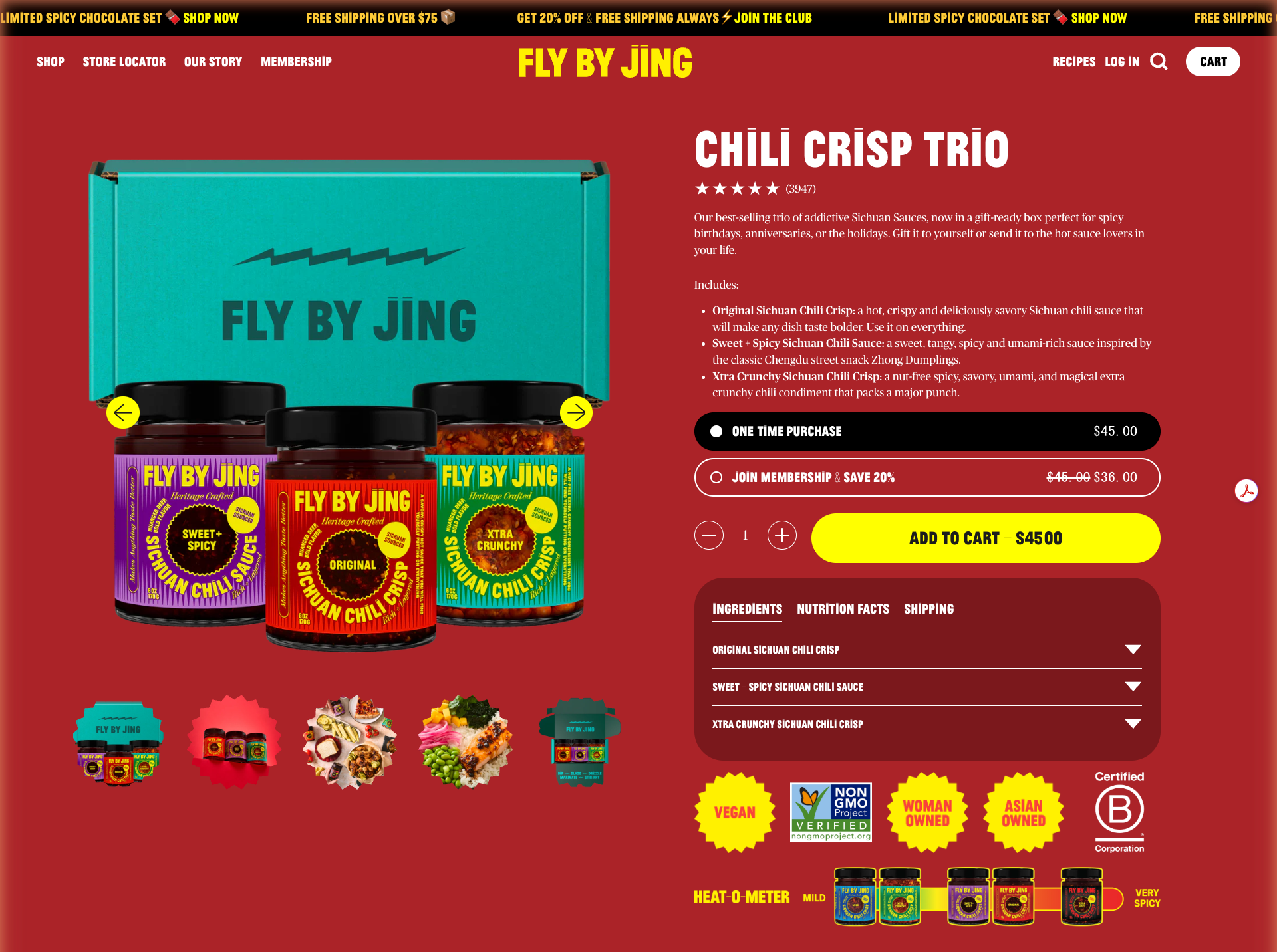
“Frequently bought with” recommendations work in a similar way, but they let the customer build their own bundle. You surface the products that naturally go together — based on real purchase data if you have it, or based on your own knowledge of what customers actually use together — and make it easy to add them in one click. Done well, this doesn’t feel like upselling. It feels like useful curation.
Tiered options are worth considering if your products have a natural “good, better, best” structure. Giving customers a clear comparison of what they get at each level — and making the middle or top option feel like obvious value — consistently pushes average orders up without any discounting. The customer is choosing to spend more because they can see why it’s worth it.
At the cart: Nudges that don’t require a discount
The cart is where a lot of AOV work happens. And most of the effective tactics here are about making the customer aware of something, not offering them a deal.
The free shipping progress bar is the classic example. If your free shipping threshold is $75 and a customer has $58 in their cart, a message that says “You’re $17 away from free shipping” is remarkably effective at getting people to add one more item. The incentive is already built into your pricing — you’ve presumably set your free shipping threshold at a point that still works for your margins. You’re not discounting anything. You’re just making the customer aware of what they’re close to.
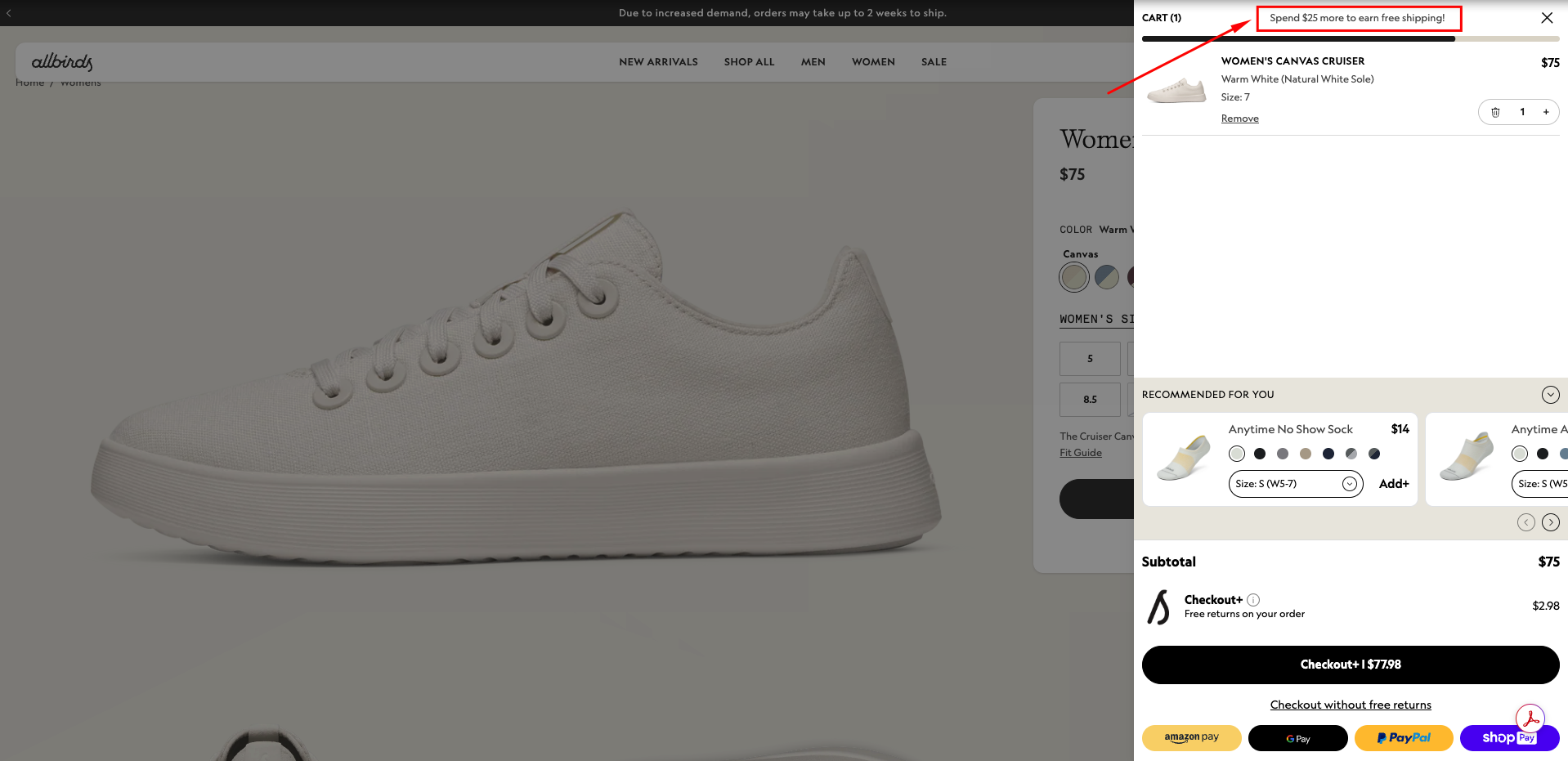
“Almost there” messaging works on the same principle. Rather than offering a discount to close the gap, you show the customer what they’re close to — free shipping, a complimentary sample, a gift-with-purchase at a certain spend level — and let them decide if it’s worth adding something. Many of them will, because the incentive feels like a reward, not a price cut.
What doesn’t work well is a vague “you might also like” section with no context. The more specific and relevant the recommendation, the more likely a customer is to act on it.
After checkout: Post-purchase upsells and reorder prompts
Most stores treat checkout as the end of the conversation. It doesn’t have to be.
A post-purchase upsell — an offer shown on the thank-you page or in the confirmation email — can add revenue to an order that’s already converted. Because the customer has already committed to buying, the friction is lower than at any other point in the journey. They’re not being asked to decide whether to buy from you. They’re just being asked whether they want to add one more thing.
The offer needs to be relevant and feel like a natural extension of what they just bought. If someone just ordered a coffee grinder, a post-purchase offer for a bag of specialty coffee makes sense. A generic “check out our bestsellers” does not.
If you sell consumable products — supplements, skincare, cleaning supplies, pet food — you know roughly when a customer is going to run out. An email or SMS at that point, before they’ve thought about reordering, is one of the easiest revenue moves available. You’re not selling. You’re just reminding them at exactly the right moment.
The repeat customer: Turning one order into the next
The customers you already have are the most valuable ones in your business. They’ve already decided to trust you. Acquisition cost is zero. Conversion rate is dramatically higher than a cold visitor.
The AOV strategies above all apply to repeat customers too, but the repeat layer is about something slightly different: making sure customers come back in the first place, and that when they do, each order is worth a little more than the last.
Loyalty structures — even simple ones — work here. Not necessarily a points program (those can get complicated fast) but clear communication about what a customer gets for sticking with you. Early access to new products. A complimentary sample with their third order. A birthday discount that actually means something rather than a generic 10% everyone gets.
The goal is to make a customer feel like your store is the obvious place to go, not just one of several options. When that’s true, you don’t need to discount to get the repeat purchase — and AOV tends to grow over time as customers become more familiar with your range.
Measuring it honestly: AOV up, margin down is still a loss
Before you roll out any of these tactics to increase AOV for your ecommerce store, it’s worth being clear on what you’re actually measuring. AOV is a useful number, but it can mislead you if you’re not careful.
If your AOV goes from $80 to $100 but you got there by offering heavy bundle discounts or free gifts that cost you money, the gain might be partly or entirely eaten by the cost of the incentive. You need to look at revenue per order net of the margin you gave away, not just the top-line order value.
The same applies to free shipping thresholds. If your threshold is set too low and customers are routinely hitting it with small orders, you’re subsidizing shipping without getting the lift in order value you were hoping for. Set it at a level that genuinely reflects a larger basket, not one that most customers hit without trying.
Measure AOV alongside gross margin per order. If both are going up, the tactics are working. If AOV is up but margin is flat or down, something is off and it’s worth figuring out what before you scale it.
Start with one move this week
Increasing average order value doesn’t require a platform overhaul or a complicated loyalty program. Most stores have room to grow AOV by doing a few straightforward things well: showing customers what goes with what, making them aware of thresholds they’re close to, and following up after checkout.
Pick one section of this post and try it this week. The free shipping progress bar is the fastest to test if you don’t have one. A simple bundle on your best-selling product page is the next step up. Once you see what moves the number, build from there.
The customers you already have are the most efficient growth lever in your store. You’ve already done the hard work of getting them there.